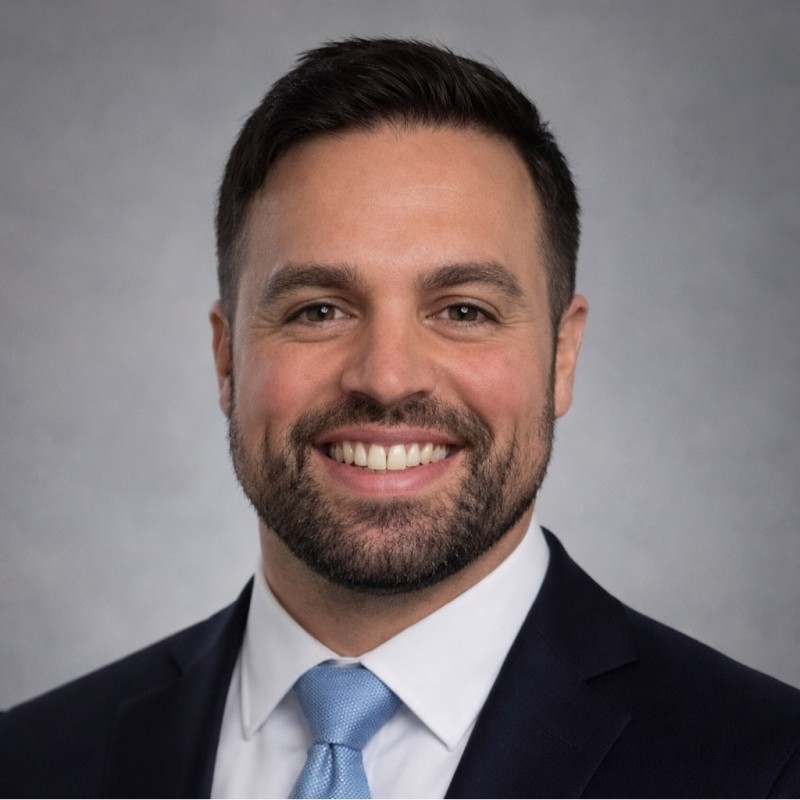
Stole Money to Gamble? What to Do in the Next 72 Hours
The CaseWhat the record shows
Philip Lee Sullivan, 43, was chief financial officer of Royal American, a property management company in Panama City, Florida. He was arrested in March 2024 after an internal audit found unauthorized charges on a company-issued credit card. According to the arrest affidavit, as reported by WMBB, he used company cards to buy gift cards and cash cards online from April 2023 until his arrest, about $1.4 million in all. The company's controller testified that he manipulated its financial controls.
In March 2025, with the case pending, he became helpline director at the Florida Council on Compulsive Gambling, a nonprofit that runs a 24/7 problem gambling helpline.
On Friday, October 16, 2026, he pleaded no contest to six felony counts in Bay County. Judge Tim Register sentenced him to 118.5 months, just under ten years, to begin immediately. He was ordered to repay nearly $1.5 million and has 30 days to appeal.
His wife testified that his behavior changed after he started prescription Adderall. Prosecutors argued the thefts were planned and concealed. Nothing here weighs in on that.
Three days before sentencing, the ODAAT Gambling Awareness podcast published an interview with him titled "I Was a Successful Accountant... Now I'm Going To Prison." Its description says gambling drained his finances and led to several personal loans before he took his employer's money, and that he then kept gambling in an attempt to get enough back to replace it. It puts his recovery at more than two and a half years, which reaches back to about the time of his arrest.
None of the coverage we reviewed reports gambling or theft during his time at the helpline. This isn't a story about a relapse. It's about what the chase leaves behind, and how long it takes to arrive.
The PatternThe chase, with someone else's money
Sociologist Henry Lesieur, who studied compulsive gamblers in the 1970s and 1980s, described the whole disorder as a chase. He mapped it as a spiral: as involvement deepens, the ways to get money narrow, until the options are gone, a point he called the closure state.
The podcast description follows that spiral: savings, then loans, then money that belonged to someone else. The plan never changes. One good run, put it back, nobody ever knows.
That plan is chasing. Returning another day to get even is one of the nine DSM-5 criteria for gambling disorder (312.31; ICD-10 F63.0). With your own money, chasing digs a hole. With someone else's, every bet adds to what's owed, and in theft cases the dollar amount often shapes how serious the charge is. The move that feels like the fix is the one making it worse, and a brain under that pressure is wired to miss it.
The diagnosis used to name this outright. DSM-IV listed illegal acts such as forgery, fraud, theft or embezzlement to fund gambling as its own criterion. DSM-5 dropped it because, as Nancy Petry and colleagues wrote in 2014, it "was endorsed only in individuals with the most severe form of the disorder." The current text folds those acts into the criterion about lying to conceal gambling.
By the time money that isn't yours is involved, you're at the severe end of a recognized mental health condition. That's not an excuse, and it's not a verdict on who you are.
The link holds at scale. A 2025 Correctional Service of Canada review of 90 studies found problem gambling rates above 30% in incarcerated populations, against an estimated 2 to 5% in the general population. Among incarcerated people, more severe gambling went with income-generating crime rather than violent crime.
The BackdropWhat Florida's helpline is hearing
Hard Rock Bet opened mobile sports betting to all Floridians in December 2023. The council's helpline report, updated March 18, 2026, tracks what followed.
The 2024 count was 1,355. Across two years, that's a 138% increase. In 2025, 69% of contacts that named a type of online gambling pointed to sports or fantasy sports betting.
Among online sports bettors in the 2025 data, 92% of those who answered had gambled away savings, equity or retirement funds (636 of 694), and 57% had trouble paying household bills (376 of 659). Then there's this:
The council notes that its contacts include family members calling about a gambler and that many people decline sensitive questions, so denominators vary. One caveat is ours: helpline data counts people who asked for help, not everyone who needs it.
The Next 72 HoursIf you've taken money that wasn't yours
This isn't legal advice. Laws differ by state, and a criminal defense lawyer is the one person who can tell you what disclosure means in your situation. Here's the order that keeps things from getting worse while you find one.
Today: stop the bleeding
- Cut access. Self-exclude and block gambling apps and sites on every device.
- Hand over the keys. Give your cards and banking logins to someone you trust, for now.
- Freeze your credit at Equifax, Experian and TransUnion. The Federal Trade Commission says a freeze is free, doesn't affect your score, and stops anyone, including you, from opening new credit in your name.
- Take and move no more money. No "temporary" transfer to cover a gap, no borrowing against the house, car or retirement account, no new loan to plug the hole. Each one is the chase in different clothes.
- Keep the records. Block the apps, but don't delete statements, account histories or messages. Your lawyer needs the real picture, and destroying records can create a second legal problem.
Within a day: tell one person
Chris Swett, a former South Carolina trial lawyer, pleaded guilty in March 2026 to stealing at least $1.5 million from clients and his firm to fund his gambling. Describing how his wife learned what he'd done, he told GamblingHarm.org: "She found out from the FBI, not me."
Telling one person doesn't mean confessing every detail. It means someone who cares about you knows you're in serious trouble with gambling and money, and that you're getting help. That's enough for day one. Rebuilding trust comes later, and it starts here.
Within 72 hours: a lawyer, before anyone else
- Don't go to your employer, HR or the person you took from first, and don't write a confession. Anything you say or write to them can become evidence. Conversations with your own lawyer are generally privileged; conversations with your boss aren't.
- If you're charged and can't afford a lawyer, ask the court for a public defender.
- Tell your lawyer about the gambling, specifically. Some systems have paths built for it. Nevada law lets an eligible person whose crime was committed "in furtherance or as a result of problem gambling" elect court-assigned treatment before sentencing, with restitution required. Florida's council offers free support to judges and attorneys aimed at "viable alternatives to incarceration alone." Whether anything like that applies to you is exactly what a lawyer can answer.
- Start treatment now. It's right for your recovery whatever happens in court. At the first session, ask how confidentiality works in your state.
The Long HaulRecovery doesn't close the case
The Florida sentence arrived, by the podcast's account, more than two and a half years into recovery. That's the part of this pattern nobody prepares you for. The betting can stop long before the consequences do. Restitution, civil claims, court dates and a job search with a record keep arriving after the last bet.
That pressure is a relapse risk of its own. The debt keeps burning after the betting stops, and the old thought comes back dressed as arithmetic: one good run would fix this. It never did. A spreadsheet doesn't fix it either. What holds is slower: financial recovery built with someone watching, and a plan for when the urge shows up anyway. If it does, the first 24 hours after a slip matter more than the slip.
Recovery isn't a credential. It doesn't immunize anyone against relapse, and it doesn't erase what happened before it started. Peer recovery work is built on lived experience by design, and people bring their whole history into it, including the parts still moving through the courts. What recovery gives you is a way to face the bill without reaching for the thing that ran it up.
Start HereOne thing today
If you're reading this because money that wasn't yours is gone, you aren't the first, and what you do next matters more than how you got here. Our urgent help page lists free, confidential options by state, by text if talking is the hard part. When you're ready for a plan, start with Cope Compass. Gamblers Anonymous meetings are free, and many are online.
Sources
- Panama City man sentenced to nearly 10 years in prison for embezzling over $1.4M from employer. WJHG Newsroom, October 16, 2026. Local primary report: March 2024 arrest after an internal audit, no contest plea to six felony counts, 118.5 months with counts concurrent, order to repay nearly $1.5 million.
- Florida Gambling Helpline Boss Jailed for $1.4M Theft, Blames ADHD Meds. Philip Conneller, Casino.org, October 17, 2026. Age, role at Royal American, 11-month period, Judge Tim Register, immediate start, 30-day appeal window, the wife's testimony, the prosecution's argument, the March 2025 helpline role.
- Florida Gambling Helpline Chief Gets Nearly 10 Years for $1.4M Theft. Sergey Demidov, RG.org, October 19, 2026. Arrest affidavit details as reported by WMBB (gift and cash cards, April 2023 to March 2024), October 16 plea, restitution, podcast release date, recovery length per the episode description.
- Gambling Helpline Director Jailed for $1.4M Theft at Previous Job. Grant Mitchell, Covers, October 20, 2026. Independent confirmation of the sentence, judge, and controller testimony; cites WMBB.
- Florida Gambling Helpline Boss Jailed Over $1.4 Million Theft Used to Fund Addiction He Helped Others Fight. Aiza Moraña, IBTimes UK, October 20, 2026. Theft dates, judge, restitution, appeal window.
- I Was a Successful Accountant... Now I'm Going To Prison | Philip's Gambling Addiction. ODAAT Gambling Awareness, October 13, 2026. Episode description: personal loans, continued gambling to replace the money, recovery of more than two and a half years. Also on YouTube.
- Florida's Problem Gambling HelpLine Report: Sports Betting Impacts in Florida, updated March 18, 2026. Florida Council on Compulsive Gambling. Primary source for the 589, 1,355 and 1,401 contacts, the 138% increase, 69% sports betting share (844 of 1,232), 92% (636 of 694), 57% (376 of 659), 14% (80 of 564), and the note on who contacts include.
- Florida Gambling Helpline Influx of Calls Since Online Sports Betting. Devin O'Connor, Casino.org, February 25, 2026. Secondary confirmation of the 589, 1,355 and 1,401 figures.
- Seminole Tribe's mobile sports betting app now available to all Floridians. NBC Miami, December 5, 2023. Hard Rock Bet statewide launch.
- Is it all about money? A qualitative analysis of problem gamblers' conceptualisations of money. Maria Heiskanen, Nordic Studies on Alcohol and Drugs, 2017. Peer-reviewed. Summarizes Henry Lesieur's work on the chase, the spiral of options and involvement, and the closure state.
- Concordance between gambling disorder diagnoses in the DSM-IV and DSM-5. Nancy M. Petry, Carlos Blanco, Chelsea Jin, Bridget F. Grant, Psychology of Addictive Behaviors, 2014. Peer-reviewed. Why the illegal acts criterion was eliminated; the four-of-nine threshold.
- Reliability, Validity, and Classification Accuracy of the DSM-5 Diagnostic Criteria for Gambling Disorder and Comparison to DSM-IV. Randy Stinchfield et al., Journal of Gambling Studies, 2015. Peer-reviewed. The DSM-IV illegal acts item, its absorption into the DSM-5 lying criterion, and the chasing item.
- A Systematic Review of the Relationship Between Problem Gambling and the Criminal Justice System. Barkovich et al., Correctional Service of Canada Research Report R-481, 2025. Ninety studies; problem gambling above 30% in incarcerated populations versus 2 to 5% in the general population; link to income-generating crime.
- Ex-Lawyer Speaks On Upcoming Prison Sentencing For Gambling-Fueled Crimes. Brian Pempus, GamblingHarm.org, June 26, 2026. Chris Swett's guilty plea and quote.
- NRS 458A.210, Eligibility for assignment to program of treatment and NRS 458A.200. Nevada Revised Statutes. Treatment election before sentencing for crimes committed in furtherance or as a result of problem gambling; restitution requirement.
- Training and Programming for Legal, Criminal Justice, and Court Professionals. Florida Council on Compulsive Gambling. Free support across the criminal justice process aimed at alternatives to incarceration alone.
- What To Know About Credit Freezes and Fraud Alerts. Federal Trade Commission. Freezes are free, don't affect your score, and block new accounts.
Questions people ask
What should I do if I stole money to gamble?
Stop the bleeding first: self-exclude, block gambling apps, hand your cards to someone you trust, and freeze your credit. Don't take or move any more money to cover the gap, and don't delete records. Tell one person you trust today. Then talk to a criminal defense lawyer before you talk to your employer or put anything in writing. This isn't legal advice, and a lawyer is the one person who can tell you what disclosure means in your situation.
Why do people keep gambling after taking money that isn't theirs?
It's called chasing: gambling to get back what's been lost. With someone else's money, the plan becomes one good run, put it back, nobody knows. Each loss raises the amount needed, so the bets get bigger and the debt grows. Chasing is one of the nine DSM-5 criteria for gambling disorder, and illegal acts to fund gambling show up mainly at the most severe end of the disorder.
Can a gambling addiction matter in a criminal case?
It can, depending on where you are. Nevada law lets eligible people whose crime was committed as a result of problem gambling choose court-assigned treatment before sentencing, with restitution required. Florida's council offers free support to judges and attorneys aimed at alternatives to incarceration alone. Only a lawyer can tell you what applies to you, so tell yours about the gambling specifically.
Related articles
Find help near you
Cope Compass is free.
Real-time support that learns your patterns and adapts to your recovery over time. The more you use it, the better it understands your triggers.
Try it now