
Online Slots and Casino Apps: A Faster Fall
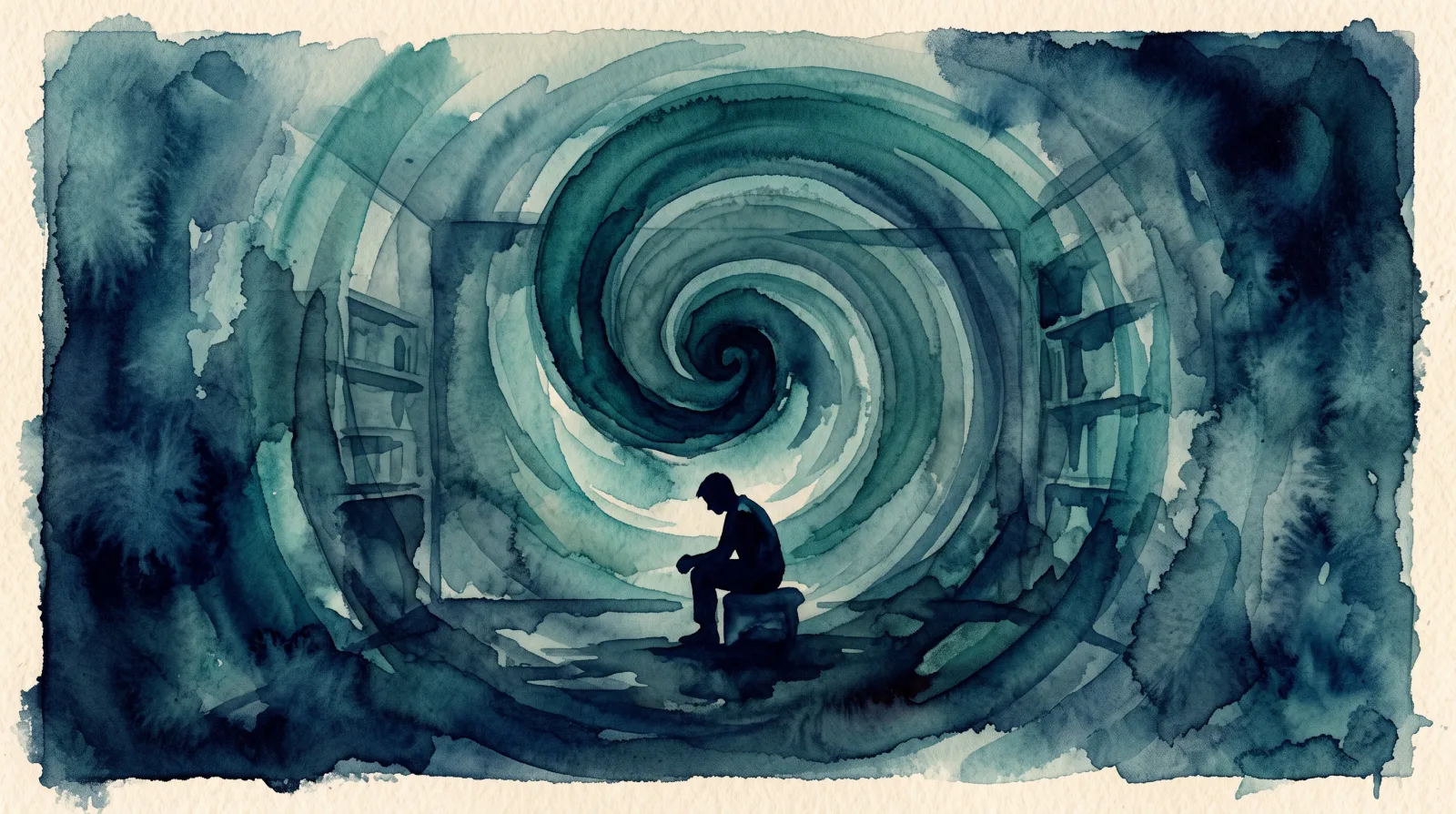
Slots are not just another way to gamble. By the measures that matter clinically, they are the most efficient way ever built to develop a gambling disorder (DSM-5 312.31, ICD-10 F63.0). Understanding why is the first step to getting free of it. For how slots sit among other online vectors, see Do You Have an Online Gambling Problem?, and for why different forms carry different risk, Not All Gambling Is the Same.
The SpeedWhy slots create addiction faster than anything else
In 2002, psychiatrist Robert Breen and colleague Mark Zimmerman published a study in the Journal of Gambling Studies that should be far better known than it is. They looked at 44 people in outpatient treatment for pathological gambling and asked a simple question: how long did it take, from the time they started gambling, to develop a full disorder?
The answer split sharply by what people played. People whose main form was a gambling machine developed pathological gambling in about one year (1.08 years on average). People who gambled mainly on traditional forms, cards, racetracks, sports, took roughly three times longer. The machine was not a detail. It was the accelerant.
Why? Because slots are built for speed and continuity. A traditional bet has friction and pauses baked in: you wait for the race, the hand, the game. A slots app has none of that. You can place a bet every few seconds, hundreds an hour, with a single thumb, and the next spin is always available the instant the last one resolves. Breen's follow-up work confirmed the pattern: forms of gambling that are rapid, continuous, and repetitive drive the fastest onset of problems. Online slots are the purest expression of all three.
The phone made it worse. Everything that used to require a trip to a casino floor now lives in your pocket, available at 2 AM, in bed, with no one watching. The speed of the machine met the constant availability of the phone, and the result is a device that can compress years of escalation into months.
The Machine ZoneDark flow and the disappearance of time
The anthropologist Natasha Dow Schüll spent fifteen years studying machine gamblers in Las Vegas for her book Addiction by Design. Her central finding is unnerving: for many people, the goal of slots is not the money at all. It is a trancelike state she calls "the machine zone," where time, money, social demands, and even bodily awareness dissolve. The play becomes an end in itself.
Schüll documented how the entire industry is optimized around one metric: "time-on-device." Everything, the ergonomics, the sound, the pacing, the removal of anything that might break the trance, is engineered to keep you playing for long, uninterrupted stretches. That design philosophy moved wholesale from the casino floor into the app on your phone.
Researchers led by Mike Dixon at the University of Waterloo gave this state a clinical name: dark flow. In a 2019 study in the Journal of Behavioral Addictions, they described dark flow as a pleasurable but maladaptive immersion in slots play, a smooth, absorbing state that offers an escape from everyday distress. The problem is what it predicts. Players who slip into dark flow experience more gambling problems, not fewer, and Dixon's team found that the combination of dark flow and depression was a strong predictor of gambling harm. The escape is exactly the trap. If any of this sounds familiar, our piece on the two-way street between gambling and depression explains the loop.
The EngineeringHow the apps are built to keep you spinning
None of this is accidental. Casino apps borrow every mechanism regulated slot machines use, then add the frictionless speed of software. A few of the most powerful:
Near-misses. Two jackpot symbols land on the line, the third stops just above or below. Lachlan Clark and colleagues showed in a 2009 Neuron study that near-misses light up the same reward circuitry as an actual payout, and increase the urge to keep going, even though a near-miss is simply a loss. Digital reels can be weighted to serve up near-misses far more often than pure chance would.
Payouts smaller than your bet, dressed as a celebration. Bet on twenty lines, get money back on three, and the machine erupts in lights and sound as if you came out ahead, even though you lost money on the spin. Dixon's group calls these "losses disguised as wins," and their research is striking: players' physiological arousal (measured by skin conductance) on these outcomes matched their arousal on real payouts, and players later overestimated how often they actually came out ahead. Your body records a reward that never happened.
Auto-spin and no clocks. Auto-play removes the last deliberate act, the decision to spin again, so the loop runs on its own while your critical thinking fades. There are no clocks, no windows, no closing time. The app is engineered so there is never a natural moment to stop.
Bonus loops and free coins. Daily bonuses, free-spin timers, and "come back" rewards reset just often enough to reopen the app after you have quit. This is the same retention machinery we detail in How Gambling Apps Keep You Coming Back. And where the app calls itself "social" or "free-to-play," the same loops run without even the label of gambling, which we cover in Sweepstakes Casino Addiction.
The takeaway is not that you are weak. It is that you are up against a product refined over decades, by teams of designers, to defeat exactly the part of your brain that wants to stop.
Who Gets HitWhy slots hit women and older adults hardest
Sports betting skews young and male. Slots and casino apps do not. Two groups the sports-betting conversation tends to ignore are among the most affected.
Women. The clinical literature draws a line between "action" gambling (chasing the thrill, more often men) and "escape" gambling (fleeing a low, more often women). Slots are the classic escape form: repetitive, numbing, solitary. Women also tend to start gambling later than men but progress to disorder faster, a documented pattern called telescoping, and machine-style play is one of its accelerants. The privacy of an app removed the two barriers that historically kept women out: visibility and a male-coded casino environment. We go deep on this in The Hidden Toll of Gambling on Women.
Older adults. Slots are especially alluring later in life because they ask nothing social of you: no rules to learn, no one to face, no need to keep up. A New York Council on Problem Gambling data summary reports that many older gamblers play to distract themselves from everyday problems, boredom, and loneliness, and that problem gamblers over 55 gravitate toward continuous, limitless games like slots and online play rather than lotteries or scratch tickets. A 2019 systematic review in the International Journal of Environmental Research and Public Health found older women in particular are vulnerable to electronic gaming machines. Loss of role, fixed income, grief, and isolation make the machine's offer of escape especially potent, and the financial harm lands on people with the least runway to recover it.
The common thread is escape. When gambling is doing a job, numbing loneliness, grief, anxiety, or pain, then removing the app is necessary but not sufficient. The feeling it was numbing needs somewhere else to go.
Warning SignsWhen it has crossed the line
Casino-app harm hides well, because it is private and quiet by design. Ask yourself honestly:
- Do you open the app first thing in the morning or last thing at night?
- Have you lost track of time or money inside a session more than once?
- Do you play to stop feeling something, stress, sadness, boredom, loneliness, rather than for fun?
- Have you hidden your spending from someone you love?
- Have you told yourself you would make it back, then deposited again?
- Do you feel restless or irritable when you cannot play?
- Does it feel less like a choice and more like something you need to do?
The Way OutHow to actually get free of it
Recovery from slots is not about willpower against a faster machine. It is about building a stack of barriers so an urge at midnight has nothing to act on. Do these in order, and do the first ones today.
1. Remove access
Delete every slots and casino app. Clear the bookmarks and saved sites. Then block at the device and network level so you cannot reinstall in a weak moment. Our step-by-step guide covers every method: how to block gambling apps. Let someone you trust hold the passcode.
2. Enroll in self-exclusion
Self-exclusion puts your own name on a list that bars you from licensed operators, so the decision you make now is binding on the version of you that will feel differently later. State programs cover every licensed operator at once. The research says pick the longest period you can stand. Start with our guide to how self-exclusion works and find your state's program. Note the gap: unlicensed and "sweepstakes" casino apps are often not covered, which is exactly why app and network blocking sits alongside this step.
3. Cut the money supply
Call your bank and ask for a gambling transaction block; many now offer one. Remove saved cards from Apple Pay and Google Pay. If you funded play with crypto, put friction between yourself and the exchange.
4. Treat the escape, not just the behavior
Because so much slots play is about escape, lasting recovery has to give the underlying feeling somewhere to go. That is where therapy, especially for depression, anxiety, grief, or trauma, earns its place, and why blocking alone tends not to hold. A budget will not fix it either; we wrote about why spreadsheets do not fix gambling debt.
5. Tell one person, and find people who get it
Secrecy is the soil this grows in. Telling one person, the real version, not the sanitized one, is the single strongest predictor of sustained recovery. Then widen it: Gamblers Anonymous, a peer supporter, a therapist, or a recovery community. Isolation is both a cause and an effect of slots harm, and connection is protective.
6. Have a plan for the urge
The urge will return, and it peaks and passes in roughly fifteen minutes. Have something ready for that window: cold water on your wrists, a walk, a text to your support person, naming it out loud ("this is an urge, it will pass"). Our 5-minute rule and how to recognize a gambling urge walk through it.
The TruthThe machine is fast. Recovery is real.
Slots and casino apps are the fastest, most private way to lose everything, not because of a flaw in you, but because of decades of deliberate engineering aimed at your attention and your reward system. That is a hard thing to be up against alone. It is a very beatable thing with the right barriers and the right support.
Recovery from a fast machine does not have to be fast. It has to be steady, and it does not reset to zero because of one hard day. Around 75% of people with gambling disorder respond to treatment. The path out is well worn, and it starts with one step.
To build a plan for the specific pull of these apps and keep a grounding tool one tap away when an urge hits, join Cope Compass and download the app. And if you want to talk to someone right now, the National Problem Gambling Helpline is free, confidential, and available 24/7 at 1-800-MY-RESET. You can also read what gambling recovery actually looks like.
Sources
- Breen, R. B. & Zimmerman, M. (2002). "Rapid Onset of Pathological Gambling in Machine Gamblers." Journal of Gambling Studies, 18(1), 31-43.: machine gamblers developed pathological gambling in ~1.08 years, roughly three times faster than traditional forms (n=44)
- Stop Predatory Gambling summary of Breen's slot-machine onset research: corroborates the "about three times faster" finding
- Schüll, N. D. (2012). Addiction by Design: Machine Gambling in Las Vegas. Princeton University Press.: the "machine zone," and "time-on-device" as the industry's core design metric
- Dixon, M. J. et al. (2019). "Reward reactivity and dark flow in slot-machine gambling: 'Light' and 'dark' routes to enjoyment." Journal of Behavioral Addictions, 8(3), 489-498.: dark flow as maladaptive escape immersion; dark flow plus depression predicts gambling harm
- Dixon, M. J. et al. (2014). "Using sound to unmask losses disguised as wins in multiline slot machines." Journal of Gambling Studies.: physiological arousal on losses-disguised-as-wins matched real payouts; players overestimated how often they came out ahead
- Clark, L. et al. (2009). "Gambling near-misses enhance motivation to gamble and recruit win-related brain circuitry." Neuron, 61(3), 481-490.: near-misses activate reward circuitry and increase urge to continue
- Guillou-Landreat, M. et al. (2019). "Determinants of Gambling Disorders in Elderly People: A Systematic Review." (published in the IJERPH / PMC).: older adults, especially older women, are vulnerable to electronic gaming machines and continuous games
- New York Council on Problem Gambling: Aging / Older Adult Research Data Summary: older gamblers play to escape boredom and loneliness; over-55 problem gamblers prefer continuous games like slots
- American Psychiatric Association. DSM-5. Gambling Disorder, code 312.31 (ICD-10 F63.0).
- National Council on Problem Gambling. National Problem Gambling Helpline, 1-800-MY-RESET.
Related articles
Find help near you
Cope Compass is free.
Real-time support that learns your patterns and adapts to your recovery over time. The more you use it, the better it understands your triggers.
Try it now