Gambling and Sleep: Why Recovery Wrecks (Then Rebuilds) Your Rest
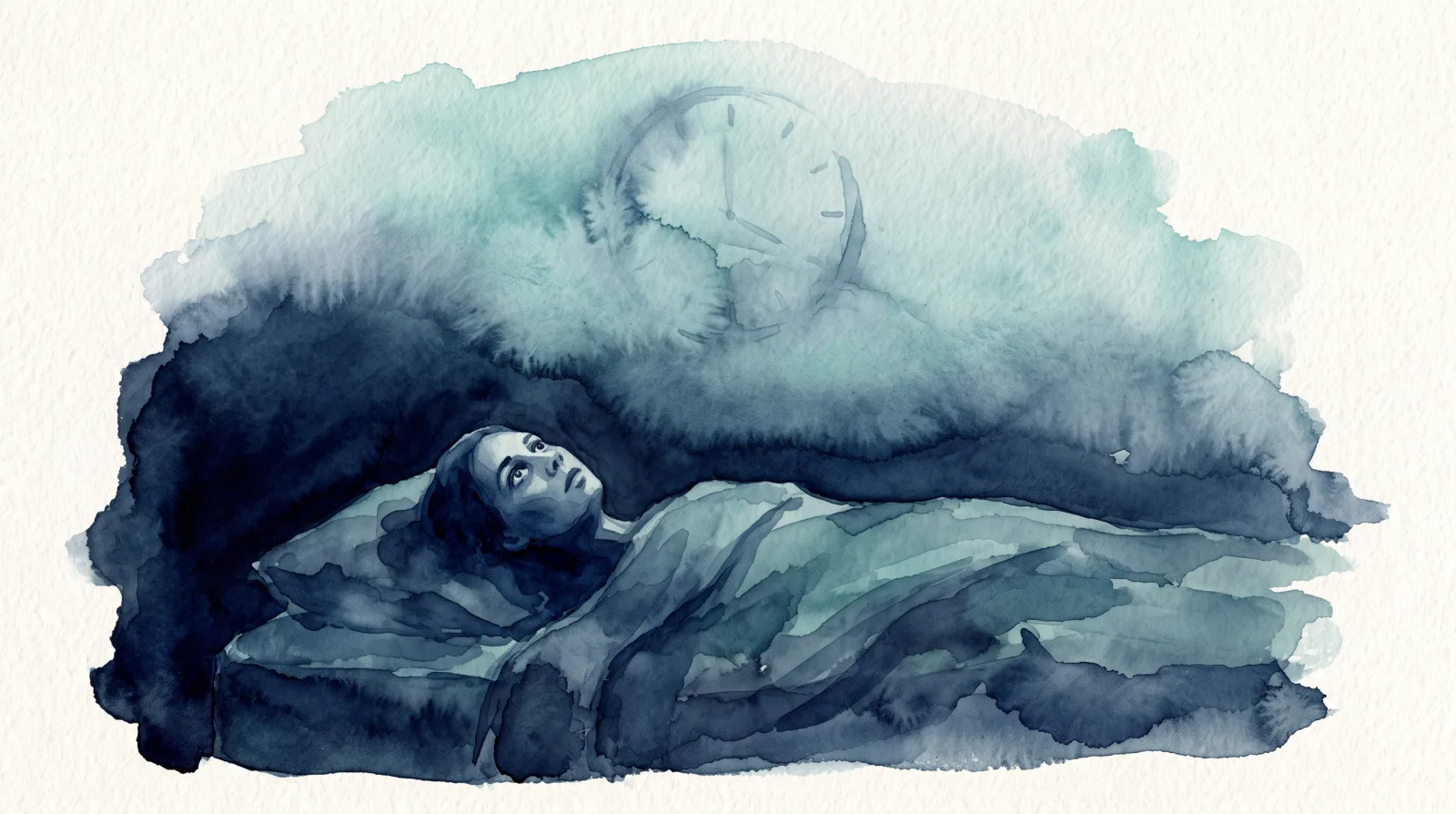
This article walks through three phases: how active gambling destroys sleep, why early recovery can make sleep worse before it gets better, and a practical protocol for rebuilding rest without white-knuckling it.
The DamageHow Active Gambling Destroys Sleep
Gambling and sleep sit on opposite ends of your nervous system. One winds you up. The other requires you to wind down. When gambling is active, the wind-up almost always beats the clock.
The sessions run late. Online sportsbooks and casino apps are open at 2am, and the quiet hours after everyone else is asleep are when the phone comes out. West Coast games end past midnight. Live betting and microbetting keep a session going pitch by pitch. The bet that was going to be the last one rarely is.
The "one more" loop fights sleep directly. Your brain releases the most dopamine not when you collect, but in the uncertain moment right before an outcome is revealed. That anticipation is arousing in the literal, physiological sense: heart rate up, attention locked, body primed. You cannot fall asleep in that state, and the loop is designed to reload before it lets you go. If you have felt the mechanics of that pull, chasing losses covers the brain side in detail.
Stress hormones stay elevated. Gambling losses, and the financial dread that trails them, keep cortisol and adrenaline circulating. Cortisol is supposed to be low at night so melatonin can rise. When you lie down after a losing session, the worry does not clock out. It shows up as the classic pattern researchers find in disordered gamblers: trouble falling asleep, and worse, trouble staying asleep.
The screen itself is the problem, twice over. Evening exposure to bright screens suppresses melatonin, the hormone that signals your brain it is night, and delays your internal clock. But light is only half of it. A 2021 Oxford study found that an engaging game before bed disrupted sleep even with all blue light filtered out, because the real culprit was cognitive arousal, the mental activation of the content itself. A betting app is engineered for exactly that kind of arousal. Filtering the light does not filter the stakes.
The result is measurable. Analyzing the National Comorbidity Survey Replication, Parhami and colleagues (2013) found that after controlling for age and other psychiatric conditions, people with pathological gambling were 4.6 times more likely to have trouble staying asleep, 4.0 times more likely to wake too early, and 2.3 times more likely to struggle to fall asleep in the first place. Sleep loss is not a side detail of a gambling problem. It is close to a core symptom.
The Rough PatchWhy Early Recovery Can Make Sleep Worse First
Here is the part almost no one warns you about. You stop gambling, you expect relief, and instead the first week or two of nights can feel harder than before. This is real, it is common, and it is temporary.
Your brain spent months or years being flooded on demand. When the flood stops, the reward system is left running lean, a state clinicians describe in the early recovery timeline. While it recalibrates, sleep is often the visible casualty:
- Rebound insomnia. The nervous system that stayed revved to gamble does not switch off cleanly. Lying in the dark with nothing to numb the mind, many people find the urges and the racing thoughts get louder, not quieter.
- Vivid or disturbing dreams. So-called "using dreams," where you gamble in your sleep and wake with a jolt of guilt or craving, are a well-documented feature of early abstinence across addictions. They are not a sign you are failing. They are a sign your brain is processing the change.
- Night sweats and restlessness. As stress chemistry resets, the body can run hot and wired at night. It feels awful. It passes.
The TrapPoor Sleep and the Path Back to a Bet
This is the loop that makes sleep worth taking seriously, because it does not just feel bad. It feeds relapse.
Sleep deprivation does two things at once, and both point the wrong way. It reduces activity in the prefrontal cortex, the part of the brain that runs executive control and lets you pause before acting, while increasing activity in reward-seeking regions. In lab studies, sleep-deprived people take more risks, including choosing the riskier decks in the Iowa Gambling Task, and become worse at learning from negative feedback, the loss you just took barely registers as a reason to stop.
Put those together and a tired brain is, almost by design, a more impulsive and less loss-sensitive brain. That is precisely the brain an urge is looking for.
Addiction researchers Brower and Perron proposed sleep disturbance as a "universal risk factor for relapse" across substance addictions, noting that people in recovery with sleep problems relapse at higher rates than those who sleep well. The mechanism generalizes cleanly to gambling: worse sleep, weaker impulse control, stronger urges, higher odds that the next hard moment ends at the app.
It also stacks with mood. Sleep loss and depression amplify each other, and gambling and depression already feed a loop of their own. Protecting sleep is one of the highest-leverage things you can do in early recovery, because it props up the exact faculties, judgment, patience, emotional steadiness, that everything else depends on.
The RepairA Sleep-Repair Protocol for Recovery
You do not fix sleep by trying harder to sleep. You fix it by changing the hours before it and the access around it. Here is a protocol built for recovery specifically, not generic sleep hygiene.
1. Put a hard block on the apps at night. This is the recovery-specific move, and it matters more than any tea or breathing exercise. Set a device-level block on gambling apps and betting sites that turns them off in the evening, and put the unlock code somewhere you cannot easily reach. The point is not willpower. It is removing the 2am option before 2am arrives. Our step-by-step guide to blocking gambling apps covers how to do it on iPhone and Android, and understanding how the apps are built to pull you back is why the block belongs on a timer, not on your resolve.
2. Build a 60-minute wind-down. Pick a consistent bedtime and start powering down an hour before it. Dim the lights. Get off all screens, not just the betting ones, because the arousal is the problem as much as the light. Read something on paper, stretch, shower, listen to something calm. You are teaching a hijacked nervous system what "night" means again.
3. Keep the phone out of the bedroom. Charge it in another room. This is the single most effective physical intervention for both sleep and urges, because it puts distance between you and the device in the exact window, lying awake in the dark, when an urge is most likely to find a crack.
4. Anchor your mornings. A fixed wake time and a few minutes of daylight early in the day do more to reset a scrambled clock than anything you do at night. Get up at the same time even after a bad night. Consistency at the front end pulls the back end into place over a week or two.
5. Have a plan for the 2am urge. When you wake wired and the pull is there, you need a move that is not the phone. A short breathing exercise, a glass of water, a few written lines about what you are feeling. The 5-minute rule and recognizing an urge for what it is both help here. If a slip has already happened, the first 24 hours is the guide for the morning after.
6. Go easy on the obvious saboteurs. Caffeine after mid-afternoon, alcohol as a sleep aid (it wrecks the second half of the night), and late heavy meals all make a fragile sleep system worse. You do not have to be perfect. You do have to stop pouring gasoline on it.
When To Get HelpInsomnia That Does Not Lift
If sleep problems last beyond the first several weeks of recovery, do not just tough it out. Persistent insomnia is treatable, and treating it protects your recovery.
The first-line treatment for chronic insomnia is not a pill. It is Cognitive Behavioral Therapy for Insomnia (CBT-I), a short, structured, evidence-based program that a clinician can deliver in a handful of sessions and that outperforms sleep medication over the long term. A gambling-informed therapist can address the sleep and the recovery together, which matters, because sedative medications and anything habit-forming deserve real caution in an addictive-disorder context. That is a conversation to have with a professional, not a decision to make alone at night.
Talk to your primary care doctor or a gambling-specialized counselor if you are dealing with sleep that will not repair, night sweats that persist, or dreams that leave you shaken and craving. You can find a clinician through the Cope Compass provider directory or bring recovery support into your pocket for the hard nights by joining Cope Compass and downloading the app. Peer support helps too: a Gamblers Anonymous meeting, online or in person, puts you around people who have been through the same sleepless stretch.
The nights get better. The reward system heals, the dreams fade, and rest comes back, often as one of the clearest early signs that recovery is taking hold. Protecting your sleep is not separate from protecting your recovery. It is the same work.
If you are struggling tonight, the National Problem Gambling Helpline is free, confidential, and available 24/7 at 1-800-MY-RESET. If you are in crisis or having thoughts of self-harm, call or text 988.
Sources
- Parhami, I., Siani, A., Rosenthal, R. J., & Fong, T. W. (2013). Pathological Gambling, Problem Gambling and Sleep Complaints: An Analysis of the National Comorbidity Survey: Replication (NCS-R). Journal of Gambling Studies, 29(2), 241-253. covers the 67.7% sleep-complaint rate and the adjusted odds ratios for insomnia in pathological gamblers.
- Austin, H., Chamberlain, S., Grant, J., & Baldwin, D. (2023). Sleep Problems and Gambling Disorder: Findings in Non-Treatment Seeking Young Adults. BJPsych Open. documents worse insomnia and sleep quality in young adults with gambling disorder.
- Brower, K. J., & Perron, B. E. (2010). Sleep disturbance as a universal risk factor for relapse in addictions to psychoactive substances. Medical Hypotheses. frames sleep disturbance as a cross-addiction relapse risk factor.
- Time of Day and Sleep Deprivation Effects on Risky Decision Making (2024). PMC. links sleep loss to reduced prefrontal control, more reward-seeking, and riskier choices on the Iowa Gambling Task.
- Sleep deprivation alters utilization of negative feedback in risky decision-making. PMC. shows impaired learning from losses after sleep deprivation.
- Efficacy and mechanisms of evening screen light and cognitive arousal on sleep. Frontiers in Neurology (2025). reviews evening screen light, melatonin suppression, and delayed sleep onset.
- National Council on Problem Gambling. Help by Text and Chat / National Helpline. provides 24/7 confidential help at 1-800-MY-RESET.
Related articles
Find help near you
Cope Compass is free.
Real-time support that learns your patterns and adapts to your recovery over time. The more you use it, the better it understands your triggers.
Try it now